
O2O marketing connects physical moments to digital growth.
Offline-to-online and online-to-offline marketing work when physical interactions create usable customer context—and digital engagement improves the next physical experience.
O2O is not a QR code on a poster. It is a connected customer journey that preserves identity, intent and measurement across physical and digital touchpoints.
The central leadership question is whether the organisation can turn insight into coordinated action across the complete customer and operating journey.
Offline-to-online and online-to-offline marketing work when physical interactions create usable customer context—and digital engagement improves the next physical experience.
For this capability to create durable value, offline journey design, digital identity capture, location and source tracking, CRM activation, field performance analytics cannot be managed as separate initiatives. They need a shared commercial purpose, common definitions and a review rhythm that turns evidence into decisions.
The practical standard is measurable movement in identity capture, store or event conversion, redemption quality, offline-to-online progression, repeat engagement. Those measures should be connected to the people and processes capable of changing them, so reporting becomes part of execution rather than a retrospective explanation.
How value moves through the journey.
Each layer has a distinct job, but the result depends on information and ownership continuing across the complete sequence.
Give every physical interaction a digital continuation.
Stores, roadshows, promoters, packaging, receipts and events generate high-value signals that often disappear after the moment ends.
A well-designed O2O journey captures enough context to continue the relationship: location, product interest, promoter, event, offer, consent and intended next action. The customer should receive immediate value such as product education, registration, appointment, redemption, service or personalised follow-up.
The experience must be quick and appropriate to the environment. Long forms and generic landing pages reduce participation and weaken the quality of the data collected.
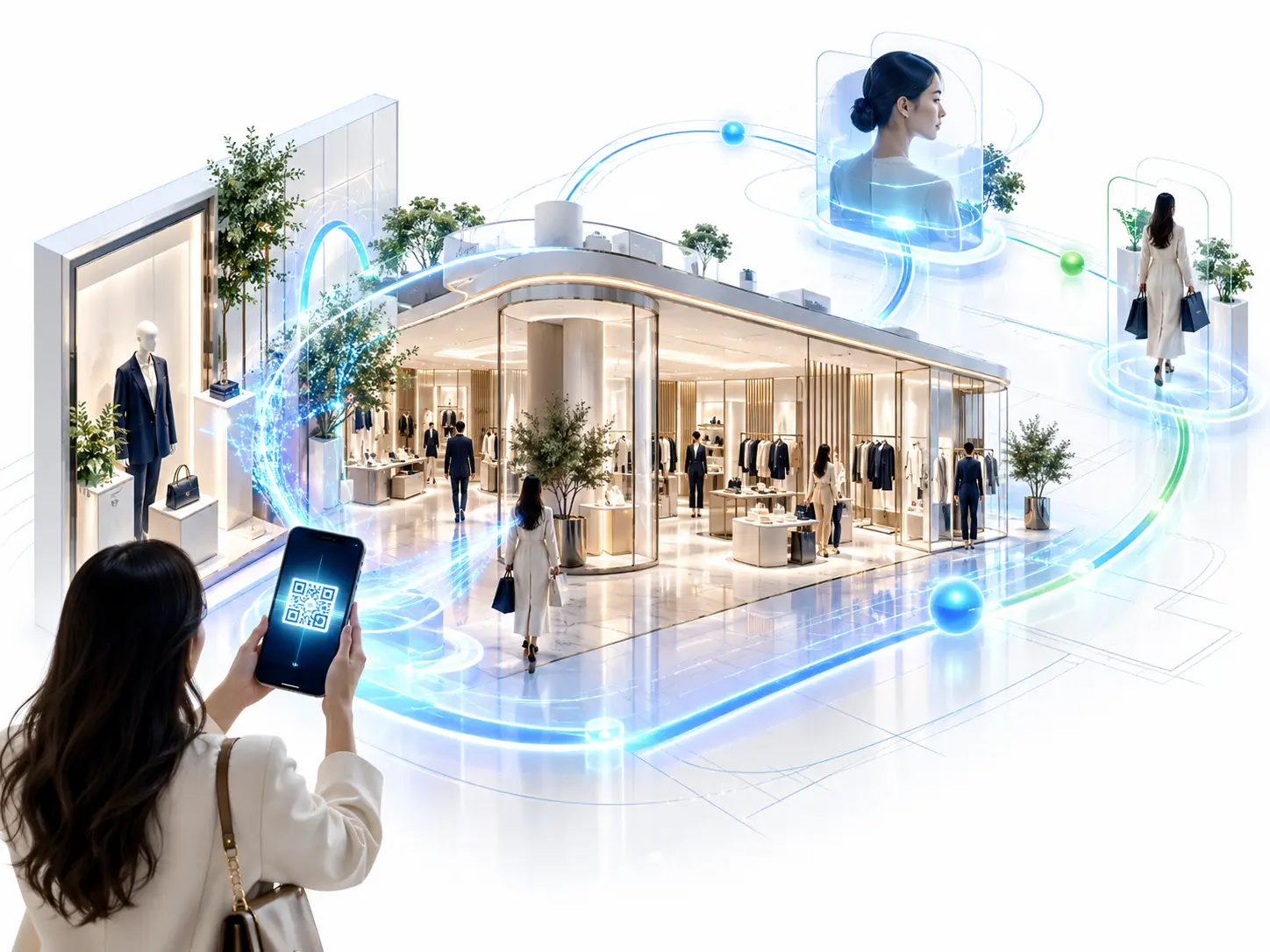
The strategic decision is to connect offline journey design with digital identity capture. If they are managed separately, the business can increase activity without improving identity capture.
Use digital context to improve the physical experience.
O2O also works in the opposite direction—from online discovery to an informed offline action.
Customers may research online, compare products, request a consultation or reserve an offer before visiting a store. Passing that context to the store, dealer, promoter or advisor reduces repetition and creates a more relevant conversation.
Appointment routing, location logic, staff notifications and redemption validation are operational components of the customer experience. They need to be designed with the campaign, not added after launch.
The operating test is whether Relevant next step changes the next decision for a real customer or team. A framework has value only when ownership, data and action remain connected.
Measure the complete loop.
O2O performance should show how interactions move across environments and contribute to customer value.
Use unique sources, campaign identifiers, promoter or location codes, transaction validation and CRM progression to connect physical activity with digital engagement and commercial outcomes.
The resulting evidence helps the business compare channels, improve field execution, identify valuable locations and build lifecycle communication from previously anonymous interactions.
Measurement should show both progression and quality. Track repeat engagement alongside the commercial outcome so local improvement does not hide wider journey leakage.
What the organisation must be able to do.
Reliable performance depends on a complete capability set. The visible customer experience and the operating system behind it must be designed together.
O2O Marketing as an operating system.
O2O is not a QR code on a poster. It is a connected customer journey that preserves identity, intent and measurement across physical and digital touchpoints. The five layers below show how intent becomes measurable action.
Physical or digital intent
Physical or digital intent defines the signal, customer condition or commercial priority that begins the system. It prevents teams from solving different versions of the problem and establishes the evidence required before investment expands.
Identity capture
Identity capture turns intent into usable context. The organisation decides which information must travel forward, which friction must be removed and which team owns the next stage of progression.
Relevant next step
Relevant next step is the decision layer. Rules, judgement, technology and customer context are brought together so the next action reflects the wider journey rather than an isolated channel objective.
Store or online action
Store or online action converts design into repeatable execution. Workflows, service levels, content, automation and human intervention must operate consistently across normal cases and exceptions.
Lifecycle engagement
Lifecycle engagement closes the management loop. Performance evidence is returned to the owners who can change priorities, journeys and investment, with repeat engagement providing a longer-term view of value.
Measures that support a better decision.
Metrics create value when they explain progression, trigger ownership and change the next action—not when they merely fill a dashboard.
A practical sequence from diagnosis to operation.
Build enough of the connected system to create evidence, then scale with confidence instead of increasing complexity all at once.
Define the outcome and baseline
Agree which customer or commercial result must change and establish the present baseline across identity capture and store or event conversion. This gives the programme a testable purpose rather than a broad transformation label.
Map the current journey and evidence
Document how physical or digital intent, identity capture, relevant next step work today. Identify delays, duplicated effort, missing context and the point where ownership or measurement becomes unclear.
Build the highest-value connection
Prioritise the connection most likely to change the limiting constraint. Integrate only the data, experience and workflow required for a usable first operating capability, then validate it with real behaviour.
Operate through a shared scorecard
Assign owners, thresholds and a review cadence. Use redemption quality, offline-to-online progression, repeat engagement to decide what should be improved, scaled, stopped or redesigned next.
Connect strategy with the conditions of execution.
Edense begins with the growth constraint and assembles only the capabilities required to change it.
We treat o2o marketing as part of a wider customer growth engine. The work begins with the result, the journey and the evidence—not with a predetermined platform or channel. This creates a clear basis for deciding what should be redesigned, connected, automated or measured.
The resulting blueprint connects physical or digital intent, identity capture, relevant next step, store or online action, lifecycle engagement. Edense can then support the programme from diagnosis and architecture through experience, data, integration, execution and optimisation, with one accountable view of commercial progress.
Questions leadership should resolve.
Use these questions to turn broad ambition into an owned commercial and operating decision.
Which offline moments contain valuable customer intent?
A useful answer names the owner, the evidence required and the decision that will change. It should also show how the answer affects identity capture.
What immediate digital value will motivate participation?
A useful answer names the owner, the evidence required and the decision that will change. It should also show how the answer affects store or event conversion.
How will customer context reach the store or field team?
A useful answer names the owner, the evidence required and the decision that will change. It should also show how the answer affects redemption quality.
How will redemption, purchase and repeat behaviour be measured?
A useful answer names the owner, the evidence required and the decision that will change. It should also show how the answer affects offline-to-online progression.
Frequently asked questions.
Concise answers to the questions organisations commonly ask before moving from strategy into delivery.
What does O2O marketing mean?
O2O marketing connects offline and online touchpoints so customer identity, context and actions can continue across both environments.
Is a QR code an O2O strategy?
A QR code is only an entry point. The strategy includes the value exchange, identity, journey, operational handoff, CRM engagement and measurement behind it.
Which businesses benefit from O2O marketing?
Retail, FMCG, healthcare, automotive, property, education, events and service businesses benefit when physical interactions influence digital engagement or vice versa.
Turn this growth opportunity into an operating plan.
Edense connects strategy, customer journeys, technology, data, execution and measurement around the outcome that needs to move.
Start a Conversation ↗